There’s a lot of discussion today about the dangers of AI.
Depending on who you listen to, AI is either the greatest technological advancement of our lifetime or will end humanity. Some of those concerns are valid. We should be thoughtful about any technology that can learn, improve, and operate with increasing levels of autonomy. We should absolutely have conversations about governance, accountability, and safety.
But we should also recognize that not all AI is the same.
“AI” has become a catch-all phrase that lumps together many very different technologies. Machine learning has been helping organizations automate and optimize processes for years. Neural networks have transformed how systems process images and video and now power most modern computer vision that recognizes and categorizes objects, people, and events. That combination is opening entirely new possibilities for industries like media and entertainment.
Each of these technologies serves a different purpose. Each comes with different risks. And most importantly, each can operate within clearly defined boundaries.
That’s where I believe the conversation should focus.
That view is reinforced by Vizrt being recognized as a Leader in the IDC MarketScape: Worldwide AI-Driven Business Cycle in the Media Industry 2026. For me, the recognition validates a direction we have been pursuing for some time: moving beyond AI as a feature and treating it as an operating model, with governance and interoperability built in from the start.
The Agentic AI Dilemma
Production teams have invested in AI tools, yet many still struggle to orchestrate complex workflows without losing editorial control.
Download the latest IDC MarketScape excerpt to learn why composable agentic platforms are reshaping how broadcasters approach automation, and why Vizrt has been named a Leader.
AI Works Best When It Has Guardrails
The area I’m most excited about is agentic AI. In media, agentic AI is not about replacing human creativity, rather it’s about reducing the distance between an idea and its execution. Agentic can autonomously work toward a goal, making decisions and taking multiple steps on its own, within the framework and boundaries you define.
The key is creating guardrails.
At Vizrt, we’ve been building systems that combine AI agents with structured knowledge bases. Think of this as giving an agent access to a trusted library rather than allowing it to wander freely through the world.
That knowledge base can contain product documentation, workflows, design rules, operational guidelines, brand standards, and organizational best practices. It becomes the foundation for how an AI agent operates.
For a broadcaster, that knowledge can be extended further. It can include graphic packages, editorial guidelines, visual language, approved templates, and even tone-of-voice standards. The agent isn’t inventing a new broadcast identity. It’s operating within the identity that already exists. One that is created by humans.
The result is an AI system that understands not only how to complete a task, but how to complete it correctly.
These guardrails aren’t one-size-fits-all. Automatically creating a weather graphic for a local news story is very different than using the same tools to create presidential election graphics for a national broadcaster. The stakes aren’t the same, so neither are the parameters. The governance, oversight, and constraints need to scale with the importance and the risk of the outcome. It’s thoughtful design that recognizes that different contexts demand different levels of human control and intervention.
This is also central to the IDC recognition. As AI becomes an operating model for media workflows, governance cannot be an afterthought. Humans need to remain in, or across, the loop, with the level of autonomy flexing according to the production stakes.
Why We Tell Stories
To understand where AI fits, we first have to understand why we do what we do.
My background in producing local TV news always keeps storytelling at the center of my focus.
We tell stories to share ideas, to inform, educate, persuade, entertain, and inspire. We create connections between people who may never meet each other. We help audiences understand the world around them.
The tools have changed dramatically over time, but the purpose has not.
The written word transformed how knowledge could be preserved and shared. The printing press made information available at a scale humanity had never seen before. Radio shrank distances and allowed a single voice to reach millions. Television combined images, sound, and emotion in ways that fundamentally changed communication. The internet connected everyone to everyone. And now AI is becoming the next tool in that evolution.
Like every major innovation before it, AI changes how stories are created and distributed. It does not change why we tell them.
Revisit our Agentic Demos from IBC 2026
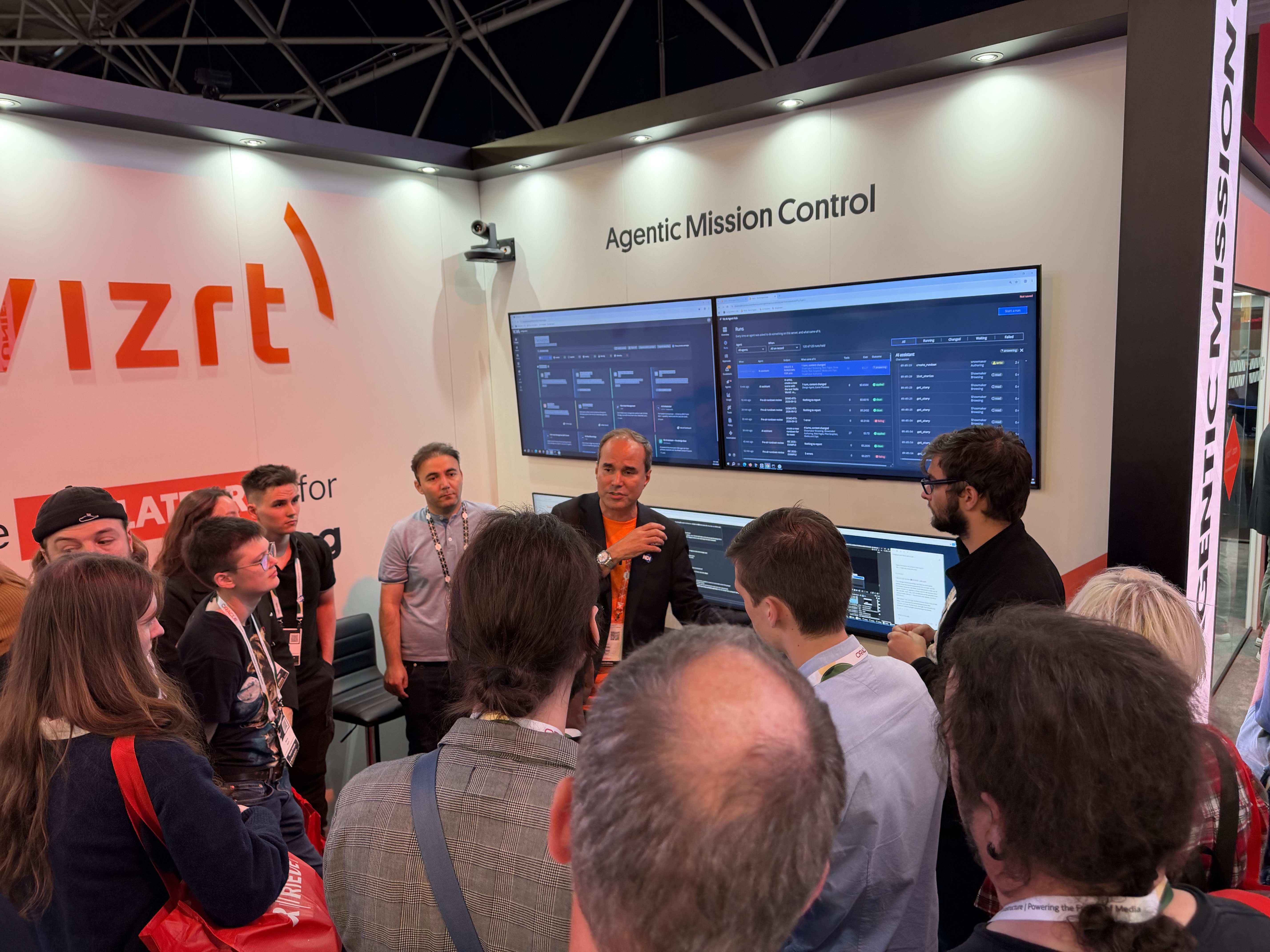
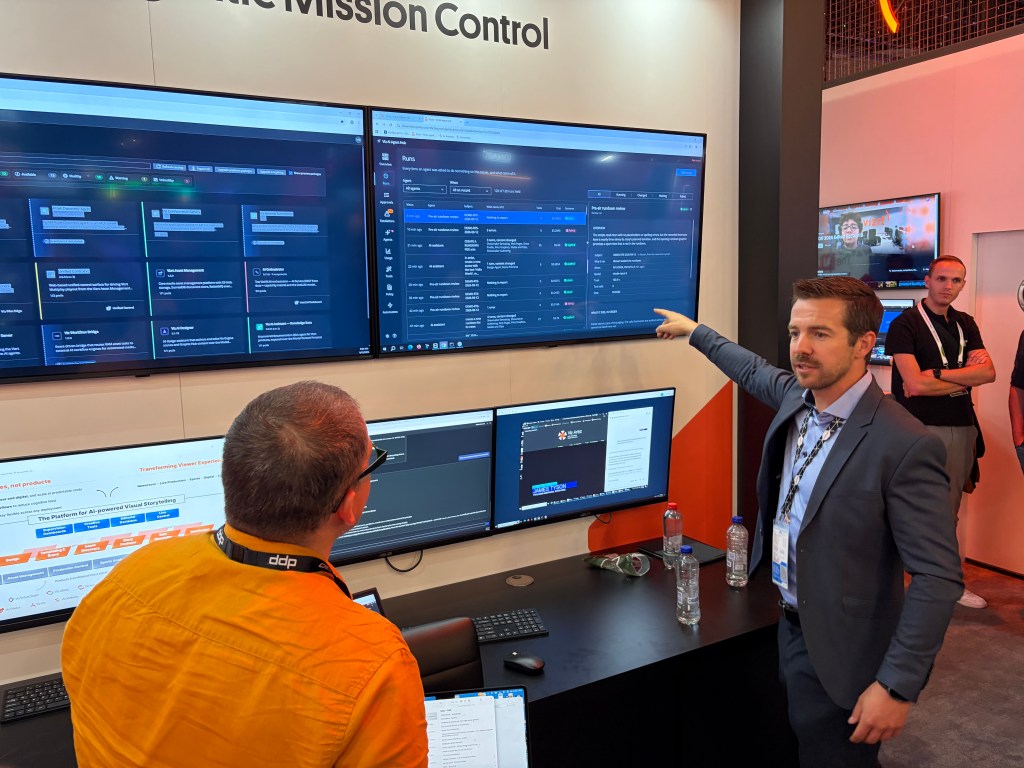
Agentic Agent Mission Control
Agentic Story Production
Unified Controller
AI as an Accelerator
When I look at the production process, I see countless opportunities for AI to help creators move faster.
It can help refine scripts. It can suggest better structure and pacing. It can surface relevant research. It can identify the right video clips, images, and supporting material. It can generate the first draft of a graphic concept. It can assist with template population. It can help build rundowns, organize production assets, and automate repetitive production tasks. All within the confines of human administered guardrails.
Within Vizrt’s own workflows, we’re already seeing opportunities where creators can use AI-driven design tools to rapidly generate concepts, graphics, and production elements before refining them in Viz Artist.
The IDC assessment also points to the importance of interoperability. No single vendor will own the entire media lifecycle, especially as innovation accelerates. The practical future is composable and platform-based, supported by open standards, agent interoperability, and API-first architecture.
Every one of these tasks reduces friction. The creator spends less time fighting processes and more time focusing on the story.
The Human Remains the Storyteller
This is where I believe many discussions about AI miss the point.
There is a difference between creating a story and telling a story. AI can help me shape an idea, organize information, build graphics, and produce content faster than ever before. But the story, the message, and the responsibility remain mine.
The editor, producer, journalist, creator, or broadcaster is still accountable for what reaches an audience. The technology becomes a tool in service of human creativity rather than a replacement for it.
Could we build systems that remove humans from that process entirely? Perhaps. Should we? That’s a different question.
For many of us in media, trust matters. Accountability matters. Human judgment matters.
The closer the story gets to the audience, the more important those things become.
The Most Powerful Force We Have
Storytelling is arguably the most powerful force in human history. Stories have built nations and toppled empires, started wars and ended conflicts. Stories move markets and inspire innovation. Stories make us laugh, cry, learn, and connect. Human civilization itself is built on shared stories.
AI does not replace that power. It amplifies our ability to harness it.
Used responsibly, AI allows us to create more efficiently, adapt content more effectively, and reach audiences in ways that were previously impossible. It helps us spend less time managing process and more time communicating ideas.
So, should we be concerned about AI? Yes.
We should always be cautious about powerful technologies that operate without sufficient safeguards, but we should not confuse caution with fear.
The future isn’t about building AI without limits. It’s about building AI with purpose, accountability, and clear guardrails.
If we do that, AI won’t diminish human storytelling. It will help more human stories be told.
Explore Vizrt's world of AI

How Vizrt AI Keyer™ brings us new composition workflows
IBC 2026: refreshed TriCasters, reimagined workflows, and the AI platform for Visual Storytelling

The Vizrt AI Keyer™ in Practice: Use Cases Across Media, Sports, and Enterprise