
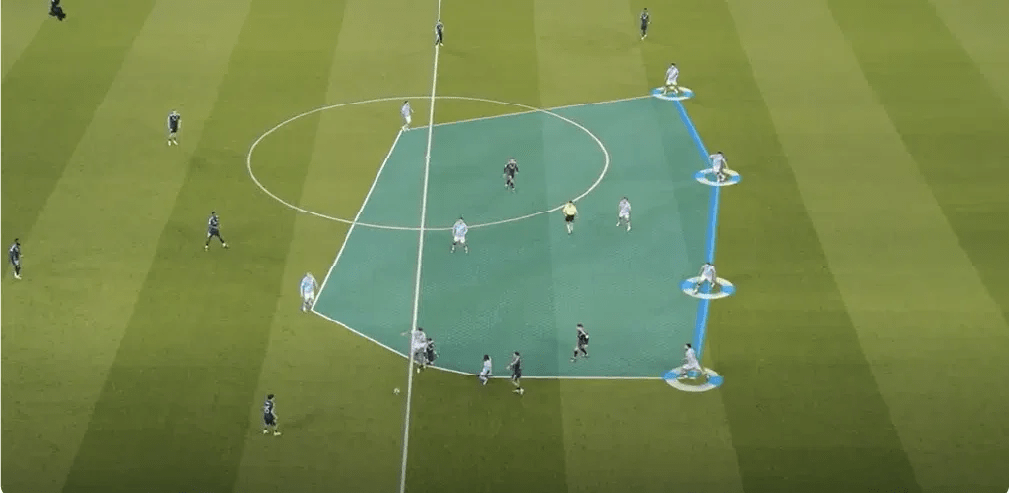
A coach pauses a clip. Draws a line where a run should have gone. Circles the gap that opened for half a second and then closed again before anyone outside the coaching staff noticed.
That one frame, with a couple of lines drawn over it, gets used for three different purposes depending on who’s looking at it: the coach explaining it, the player absorbing it, and, on the far end of the same underlying technology, fan-first content that gives supporters a deeper understanding of the play.
This is where tools like Viz Libero Teams start to become useful to clubs beyond traditional whiteboard or video review.
Coach: Show the player what you mean
The problem most coaches run into isn’t spotting a mistake. Most of them see it the moment it happens. The problem is the gap between that instant read and getting a player to see the same thing clearly enough to fix it. Fifteen seconds of pointing and describing on the sideline rarely covers it. By the time the explanation lands, the moment it was describing has already blurred in the player’s memory.
Drawing it out with Xs and Os on a whiteboard can explain the principle but it cannot create the exact picture of the moment.
A telestrated frame closes that gap.
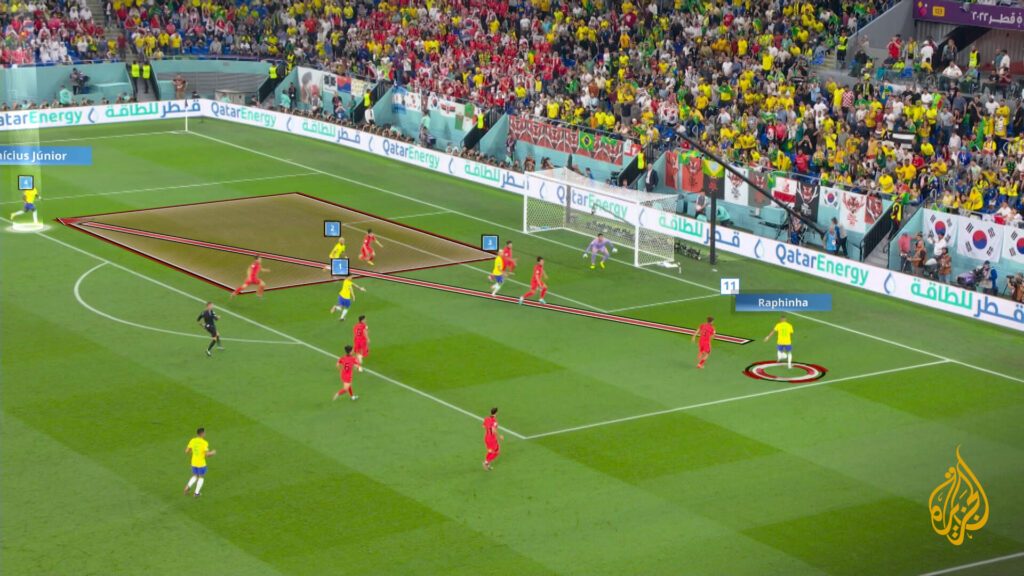
It puts what the coach saw directly in front of the player, at the exact angle and moment that mattered, so there’s nothing left to reconstruct from memory or guess at from a verbal or sketched description. In fact, with Viz Libero you can go one step further and show the camera angle from a different perspective with 3D camera flights.
What actually happens for the player
Research led by Dr. John Francis at the University of Worcester, re-published as a research brief by the FIFA Training Centre, looked at what happens when telestration, drawing directly onto video of the exact play rather than just talking over it, is used with players.
Fourteen English Football League Championship players were divided into two groups. One watched raw video. The other watched the same footage with telestration added.
A few findings stand out:
- 25-30% Higher retention of information: The players shown telestrated footage scored 25–30% higher on tactical recall. The gap widened the longer the study went on, suggesting the benefit compounds with regular use.
- Sharper clarity on set pieces: Structured, well-rehearsed moments like corners and free kicks depend on everyone reading the same shape at the same time. Annotated video makes that formation unambiguous in a way a verbal walkthrough often can’t, which is likely why the recall advantage was most pronounced in this category.
- Clearer player relationships, less miscommunication: Players rarely think about the game the same way, let alone speak the same first language in multilingual clubs. Visual annotation gives everyone a shared reference point that doesn’t rely on a verbal explanation landing the same way for every player.
- Isolating the actual teaching moment: Perhaps the most practical finding, telestration works best when it’s pointed at one specific idea, not layered across everything in a clip. Used well, it draws a player’s attention to the one detail that matters.
Best practice: One clip, one point
The same research is careful to flag a real risk alongside the benefit: too much annotation on one clip causes cognitive overload and can actually hurt understanding rather than help it. So make the teaching point obvious, by showing players where to look.
Keep it to one clip, one point. Resist the urge to mark up every player, every run, and every option in a single frame just because the tool makes it possible. A clip with three arrows and one clear idea will usually teach better than a clip with twelve arrows and three competing ideas. The goal is to show the one thing that matters most.
What it looks like at scale
The same visual approach coaches can use to break down one play for one player has been trusted by the world’s best sports storytellers, for years, to explain the game to a much bigger audience with a lot less patience for confusion.
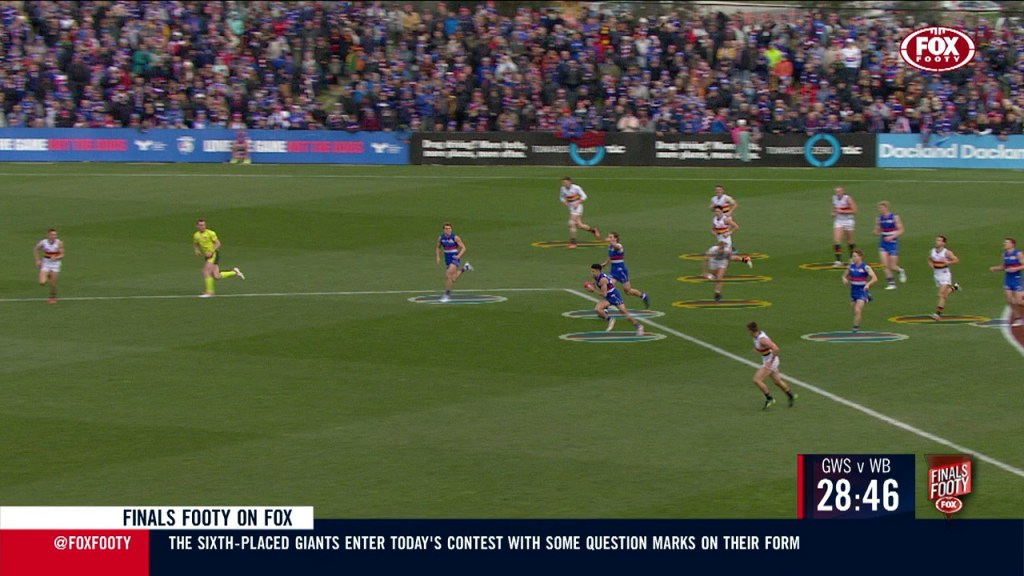
For instance, Fox Sports Australia has used Viz Libero across its coverage since 2016, including the Fox Footy AFL broadcasts, for pre-match breakdowns, half-time analysis, and highlighting the plays that decided a game.
Federations like UEFA have also leveraged Viz Libero. Its performance analysis team uses the tool to create tactical analysis reports for coaches across European clubs, AND sponsored analysis snippets designed for social media. These short clips have helped UEFA capture a 78% increase in social engagement with a new generation of fans.
Behind the scenes with the Portland Trailblazers team using Viz Libero
Viz Libero in use for Portland Trailblazers
UEFA uses Viz Libero to create analysis clips to
engage and attract fans on social media.
Swiss National Football making use of Viz Libero telestration tool
Viz Libero in use by the AFL Footy team
The same frame, doing different work
That creates an interesting opportunity for clubs. The same underlying analysis can serve multiple audiences.
- Train: Telestration helps the coach make instructions clear.
- Recall: The players get a deeper understanding of tactics.
- Fan engagement: The team’s community manager can help fans better understand the play, and engage sponsors.
Three different jobs, three different stakes, the same telestrated clip doing the work each time.
Give your team the upper hand
Get in touch to learn how Viz Libero Teams can support better tactical decisions.