
BBC - Making complex stories easier to understand with Vizrt tools
At BBC News, visual storytelling doesn’t start with graphics. It starts with editorial intent.
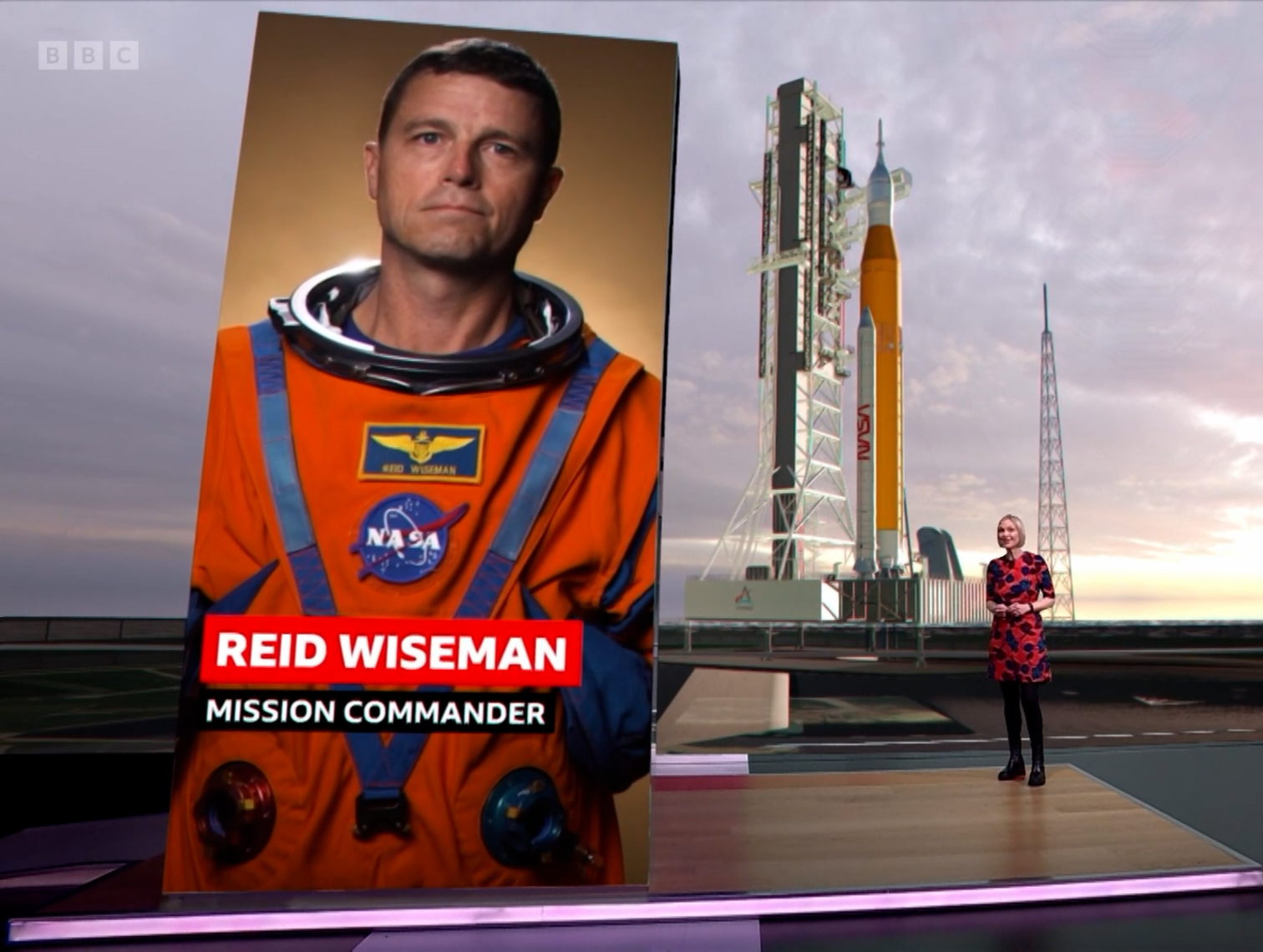
Every story is first assessed on its own terms: does it need to be shown, or simply told? Only when a story demands clarity, for instance when it involves change, scale, or complexity like a rocket launch, does the BBC News Design and Engineering team, where Zoë Thomas and Thomas Doukinitsas work, dedicated to creating AR and VR graphics step in. That decision is critical, because once visual storytelling begins, it becomes a coordinated process between journalists, designers, and production teams working under tight deadlines.
From there, the workflow becomes highly collaborative.
Journalists define what the audience needs to understand. Designers translate that into visual form to show movement, relationships, or shifts in data. It’s not a linear handoff. It’s an ongoing conversation, refining the story as it develops. Underpinned by Vizrt tech.
The graphics and tools behind BBC’s Artemis 2 mission coverage
Using Viz Artist, designers build the visual environments and graphic elements that bring stories to life — whether that’s a data-driven explainer, an augmented reality scene, or a full virtual set. These designs are then rendered in real time through Viz Engine, ensuring everything can respond instantly to live conditions.
But speed is only part of the equation.
The BBC team also need to take those designs and make them usable at scale, across all their platforms, from live TV to online and social channels. Templated graphics, mean journalists and producers can update graphics directly, or are updated automatically during elections, without needing to rebuild the underlying design. That removes a major bottleneck in fast-moving news environments, where stories evolve minute by minute
BBC’s election graphics, from the UK General Election to the Senedd Election
At the system level, Viz Arc combined with the BBC’s custom tools ties it all together to control the graphics execution into a coordinated workflow. This allows the BBC to manage complex productions such as elections coverage seamlessly, using graphics to inform, educate and entertain its audience, as articulated in its founding mission statement.
The result is a production environment that is both controlled and flexible. Graphics can be tested, refined, and updated quickly. Templates ensure consistency across broadcast, digital, and social platforms. And as stories change, visuals can change with them without disrupting the workflow.
Bringing the Coronation Crown to life in augmented reality
For the BBC, this isn’t about adding more graphics. It’s about making the right stories clearer. And, Vizrt enables the team to move from editorial intent to on-air visual storytelling quickly and reliably – turning complex topics into something audiences can follow in real time.
Because in news, clarity is what matters most.
Ready to Turn Complex Stories into Clear Visuals?
See how our graphics tools can help your team move from editorial intent to on-air storytelling, quickly, reliably, and at scale.